

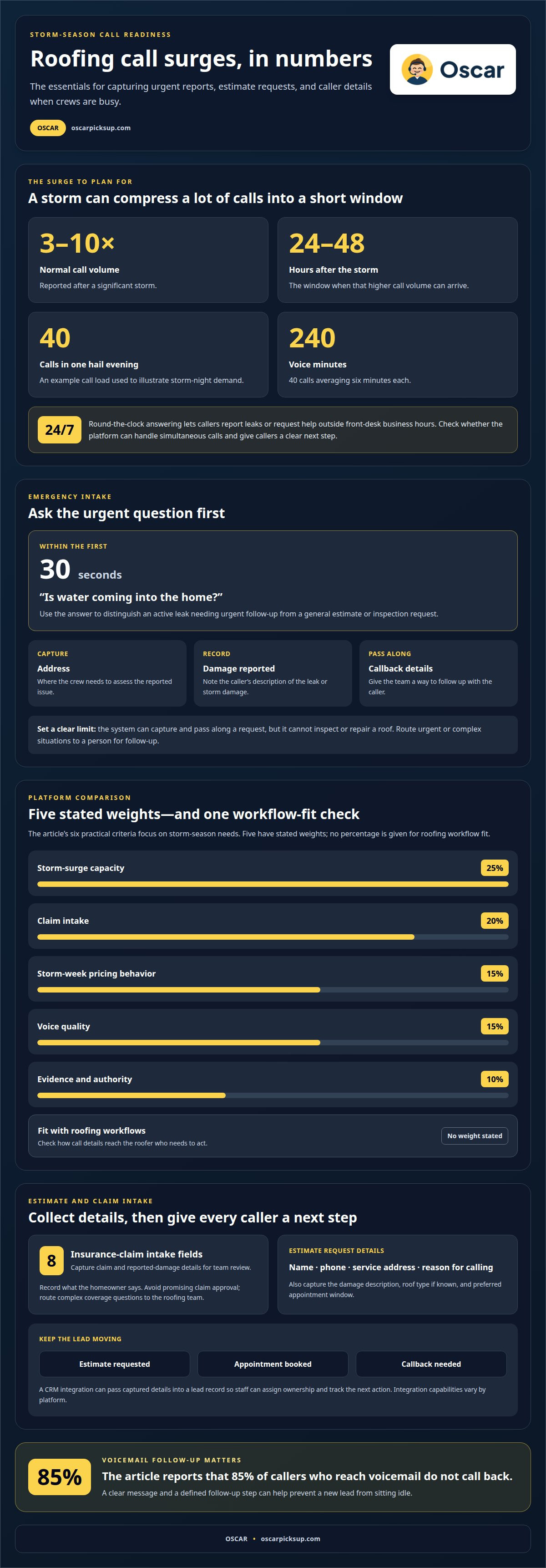
Forty calls averaging six minutes add up to 240 voice minutes in one hail evening. An AI receptionist for roofing can answer incoming calls and capture key details, but handling that surge depends on how the platform manages call volume, urgent reports, and appointment requests.
Roofing crews can’t stop work whenever the phone rings, but homeowners still need a clear next step when a leak starts or a storm damages a roof. An AI receptionist for roofing can capture the caller’s needs, sort requests, and keep estimate inquiries moving.
This guide explains how AI receptionists can handle roofing emergencies, book free estimates, support scheduling and financing questions, and what to compare across platforms. You’ll learn which call tasks can be automated, where a human handoff matters, and how to judge whether a system fits your storm-season workload. The goal is simple: fewer missed opportunities, clearer intake, and less time spent chasing call details.
Key Takeaways
- Set up emergency call intake to capture the roof problem, identify urgent leaks, and pass clear details to the crew.
- Use a consistent qualification flow to collect homeowner and project details, then move estimate requests into the scheduling process.
- Compare platforms by how they handle call surges, lead qualification, appointment booking, and the roofing questions callers commonly ask.
- Map the full caller journey, from the first call or message to a booked appointment, so each request has a clear next step.
Can an AI receptionist handle roofing emergencies?
Yes. An AI receptionist can answer roofing calls around the clock, gather details about emergencies, and record requests for follow-up. During storm season, its usefulness depends on clear intake questions and the platform’s ability to handle overlapping calls.
After a significant storm, roofing companies can receive 3-10 times their normal call volume within 24-48 hours. A caller reporting storm damage needs a quick, useful response. Ask whether water is coming into the home during the first 30 seconds. Then capture the address, damage reported, and best callback details so the crew can assess urgency.
Round-the-Clock Roofing Call Answering
Twenty-four-hour answering gives callers a way to report a leak or request help outside an in-house front desk’s business hours. During an overnight surge, simultaneous-call capacity matters: unanswered calls can fall into voicemail instead of being captured. For scale, 40 calls averaging six minutes total 240 voice minutes in one hail evening. Check how a system handles concurrent calls and whether callers receive clear next steps.
Call handling should distinguish an active leak from a general estimate request. Someone with water entering the home needs urgent follow-up; someone asking about storm damage may need an inspection appointment. The system can capture each request and pass along the details, but it cannot inspect or repair a roof.
Call Records and Language Support
Call summaries and transcripts let crews review what callers said without replaying every conversation. Recordings can provide more context, while concise summaries can flag reported leaks, storm damage, and appointment requests. For example, a roofer returning to the truck can scan a summary to decide which caller needs attention first.
In the United States, call recording may be subject to federal and state privacy and consent rules, which vary by state and circumstances. Use a clear recording notice and consent process suited to applicable requirements, and limit access to stored records. For bilingual or multilingual calls, assess whether the system can understand the caller, capture the same emergency details, and provide a useful summary in that language.
Can an AI receptionist schedule free roofing estimates?
An AI receptionist can qualify an estimate request, collect contact details, and book an available appointment. The call flow should distinguish a free roof estimate from an active leak, repair request, or insurance claim. This gives the roofing team a clear next step for each caller.
Start with the caller’s name, phone number, service address, and reason for calling. Then capture the damage description, roof type if known, and preferred appointment window. For example, record a request to inspect missing shingles after a storm separately from a routine roof replacement inquiry. Clear intake also helps prevent duplicate follow-up when the same lead calls again.
Insurance-claim intake needs focused questions. A properly configured roofing AI receptionist captures eight insurance-claim intake fields to organize the caller’s reported damage and claim details for team review. Keep qualification factual: record what the homeowner says, avoid promising claim approval, and route complex coverage questions to the roofing team. This keeps the call useful without turning intake into an insurance decision.
Follow-up works best when each lead has a recorded status, such as estimate requested, appointment booked, or callback needed. A CRM integration can pass captured details into the company’s lead record, where staff can assign ownership and track the next action. Integration capabilities vary by platform, so compare how information moves from the call into the tools your team already uses. A quick response matters: the page reports that 85% of callers who reach voicemail do not call back. Use a clear message and a defined follow-up step rather than leaving a new lead idle during roofing season.
For teams looking to capture estimate requests while they’re calling or working on roofs, automated appointment handling can help keep the intake process moving.
Comparing AI receptionist platforms for roofing companies
Compare platforms by how they handle storm volume, emergency calls, estimate requests, and routine questions. A six-criterion evaluation for roofing companies should focus on practical storm-season needs, not just polished demos.
AI Platforms Versus Human Answering Services
AI receptionists use software to answer calls and capture details; human answering services rely on staff to speak with callers. Human support offers a person-to-person conversation, while AI can follow a consistent roofing script across incoming calls. Compare how each handles emergency reports, estimate requests, and overflow during a storm surge. Also check how call details reach the roofer who needs to act on them.
Benefits and Drawbacks for Roofers
An AI platform can answer common questions, capture the caller’s reason for calling, and keep intake moving while crews are on roofs. That makes it useful for routine estimates and clear emergency reports. The tradeoff is that a scripted system may not handle unusual situations like an experienced staff member. Set clear limits: it should collect facts, avoid promises about repairs, and route complex or urgent cases for human follow-up.
Compare platforms on six practical criteria: storm-surge capacity, claim intake, storm-week pricing behavior, voice quality, evidence and authority, and fit with roofing workflows. The evaluation weights storm-surge capacity at 25%, claim intake at 20%, storm-week pricing behavior at 15%, voice quality at 15%, and evidence and authority at 10%. These measures help separate a roofing-ready service from a general call handler.
Receptionist Setup and Training
Build the script around real calls. Ask for the caller’s address, reported damage, whether there’s an active leak, estimate needs, and preferred appointment times. Set clear paths for emergencies, routine estimates, and questions that should go to staff. Test the script with examples, such as a caller reporting water coming through the ceiling after a storm. Review summaries and recordings to spot missing details and improve the wording.
Some roofing businesses can set up an AI receptionist in 5-15 minutes. Still, setup time doesn’t replace testing. Before relying on it during storm season, run sample calls for estimates, urgent leaks, and unclear requests. The best fit is the platform that captures the right information and moves each call toward a defined next step.
How does an AI receptionist handle roofing calls, texts, and appointment scheduling?
A roofing call can follow a clear sequence: greeting, reason for calling, details, and next step. The receptionist captures the caller’s name, callback number, service address, and request. Someone seeking a replacement estimate follows a different path from someone reporting an active leak. This helps staff review the right information before responding.
Texts are a separate channel from phone calls. A roofing company should distinguish incoming calls from text messages and decide how each reaches staff. For a text about a damaged shingle, intake can capture the sender’s contact details, address, and brief damage description. Don’t assume phone-answering software also sends or answers texts; those functions depend on the platform’s features.
For appointments, the receptionist can collect the homeowner’s preferred days and times, then book an estimate when scheduling is available. A useful call flow repeats the appointment details before ending. For instance, it can confirm the address and requested estimate window, then record the booking for the team. That gives the caller and crew a clear next step.
Set separate paths for estimate requests, repair questions, and emergency reports. Each path should gather only the details needed for that request. A homeowner calling about storm damage may need an inspection, while someone seeking a routine estimate needs a booking. Clear categories help staff prioritize follow-up instead of treating every inquiry alike.
A message or summary after each call can preserve the caller’s request for the team. Staff can use it to return a call, prepare for an appointment, or route an urgent report. Review the intake script if callers repeatedly leave out key details. A small wording change, such as asking for the property address before discussing scheduling, can make records easier to act on.
To keep roofing calls moving while crews are busy, explore automated call answering for your intake process.
Oscar: Oscar AI receptionist
Oscar AI receptionist automatically answers incoming business calls around the clock. For a roofing team, it can answer caller questions, take messages, and book appointments while the crew is on a roof or driving between jobs. Oscar is software, not a human receptionist or business phone service.
Use Oscar when calls need a dependable first point of contact and your team can follow up on the details. A homeowner can describe a repair concern or request an estimate appointment; Oscar can capture the message and book an appointment. Your team can then review the information and decide what to do next.
Oscar fits the call-answering part of a roofing workflow. It doesn’t inspect roofs or perform repairs. If you want incoming calls answered while your crew focuses on field work, contact Oscar to discuss the AI receptionist.
Set up a steadier first step for callers
The next step is to decide what a good first call should capture and where each request should go. Keep the process clear for callers and workable for the crew. An AI receptionist for roofing is most useful when its call flow reflects how your team handles estimates, urgent reports, and follow-up.
Start with the calls that interrupt field work most often. Set the questions, message details, and appointment path your team needs. Then review the handoff: staff should be able to see what the caller needs and what action comes next. A clear process supports the customer experience without adding another task to the day.
Oscar offers Oscar AI receptionist for businesses that need incoming calls answered and handled through software. If you’re ready to discuss how it could fit your roofing call workflow, contact Oscar about your roofing calls. A practical call process can give your team a more organized place to start.
Frequently Asked Questions
Can AI handle 40 calls in one evening?
Yes, if the system supports overlapping calls and can handle their total duration. Call count alone doesn’t show capacity: brief estimate requests differ from longer damage reports. Test routing during the busiest hours, confirm which caller details are captured, and define what happens when staff need to step in. Run these tests before storm season with both routine and urgent call examples.
How many calls do roofing companies miss after a storm?
Lead capture after a major storm can vary depending on call volume and how calls are handled. That measures lead capture, not a fixed count of missed calls. The number of unanswered calls depends on call volume, call length, and how many conversations the system can handle at once. Compare the incoming-call log with captured leads to find where requests are falling through.
What is an AI receptionist for a roofing company?
An AI receptionist is software that answers business calls and handles routine caller interactions. For a roofing company, it can answer common questions, record a message, or book an appointment. For example, someone asking about an estimate can leave contact details and a preferred appointment time. The roofing team still decides how to assess the roof, recommend work, and respond to unusual requests.
What features should roofers look for in an AI receptionist?
Look for clear call handling, useful intake questions, appointment booking, and a reliable way to pass messages to the team. A roofing script should distinguish a repair inquiry from an estimate request and identify reports that need prompt attention. Also assess capacity during busy periods, summary quality, language support, and compatibility with the team’s lead records and scheduling process.
Which AI receptionist services are best for roofing companies in the United States?
The right choice depends on which calls a roofing company needs handled. Compare how each service answers questions, records messages, books appointments, and routes urgent reports. Oscar AI receptionist is designed for businesses seeking automated call answering. Evaluate it against your team’s actual call flow, including how staff receive caller details and take over requests that need a personal decision.
Can an AI receptionist qualify roofing leads and provide estimates?
An AI receptionist can ask intake questions, capture a caller’s contact details and project needs, and book an estimate appointment. It can help distinguish a roof replacement inquiry from a repair request. It cannot inspect the roof or determine the scope and price of work from a call alone. A roofer reviews the information and prepares the assessment or estimate.


